



Key Takeaway
Coffee grind size controls extraction speed, which determines your coffee's flavor. A finer grind increases surface area, speeding up extraction (useful for espresso), while a coarser grind slows it down (ideal for French press). If your coffee tastes sour, it is under-extracted, grind finer. If it tastes bitter, it is over-extracted, grind coarser.
Coffee grind size is the one setting most home brewers get wrong, and it shapes your cup more than the beans, the water, or the machine. Grind the same coffee two different ways and you'll taste two different drinks. One might come out bright and sweet. The other, thin and sour, or dark and bitter. Same bag. Same water. Just a different grind.
Here's the short version: grind size controls how fast water pulls flavor out of the coffee. That process is called extraction. Coarse grounds slow it down. Fine grounds speed it up. Your job is to match the grind to your brewing method so the water has just enough time to pull out the good stuff and stop before it pulls out the bad. This walkthrough shows you how to do that, step by step.
Step 1: Understand Why Coffee Grind Size Matters
Think of ground coffee as a sponge. Water flows through it and soaks up flavor along the way. The finer you grind, the more surface area you create, so water grabs flavor faster. Grind too fine for your method and the water sits too long, pulling out harsh, bitter notes. That's over-extraction.
Grind too coarse and the opposite happens. Water rushes through before it can pull out the sweetness. You get a weak, sour, or salty cup. That's under-extraction. Grind size also changes how long your brew takes and how fast the water flows. A fine grind clogs the flow and slows things down. A coarse grind lets water race through.
So the goal isn't one perfect grind. It's the right grind for the method you're using. If you want to go deeper on how brewing choices shape your cup, we cover the bigger picture in our look at what changes the taste of your coffee.
Step 2: Learn the grind size scale
Grind sizes run from extra-coarse down to extra-fine. The easiest way to picture them is to compare each one to something in your kitchen. Here's the full scale with a real-world match and the methods each one fits:
| Grind size | Looks like | Best brewing method | Rough brew time |
|---|---|---|---|
| Extra-coarse | Peppercorns | Cold brew | 12–24 hours |
| Coarse | Rock salt | French press | 4 minutes |
| Medium-coarse | Coarse sand | Chemex, Café Solo | 4–5 minutes |
| Medium | Beach sand | Drip machine, flat-bottom pour-over | 4–6 minutes |
| Medium-fine | Table salt | Cone pour-over (V60), AeroPress | 2–3 minutes |
| Fine | Powdered sugar | Espresso, Moka pot | 25–40 seconds (espresso) |
| Extra-fine | Flour | Turkish coffee | 3–4 minutes |
Keep this table handy. Once you know where your method lands on the scale, dialing in gets a lot easier.
Step 3: Match your grind to your brewing method
This is where grind size earns its keep. Each method needs a different grind because each one uses water differently. Some soak the grounds for minutes. Others push water through in seconds.
Full-immersion methods (French press and cold brew)
These soak the grounds in water for a long stretch, so you want a coarse grind. In a French press, the grounds sit in hot water for about four minutes before you press. Rock salt is your target. Go finer and the coffee turns bitter and muddy, plus the fine bits slip through the metal filter and settle in your cup. If you're new to it, our French press brew guide lays out the ratio and timing.
Cold brew goes even coarser. Since the grounds steep for 12 to 24 hours, an extra-coarse grind keeps the long soak from turning harsh. A smooth, low-acid concentrate is the reward. We break down the full process in our cold brew concentrate guide.
Pour-over methods (Chemex and V60)
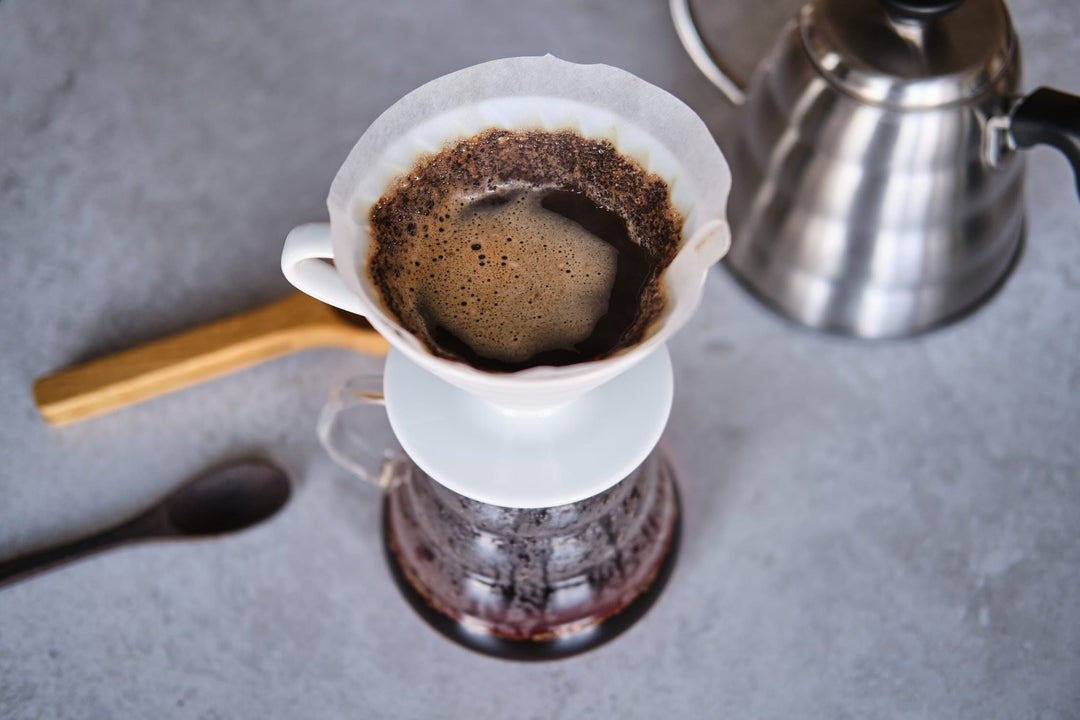
Pour-over brews live and change based on how fast water drips through. A cone-shaped dripper like the Hario V60 drains quickly, so it likes a medium-fine grind, close to table salt. A flat-bottom or thick-filter brewer like the Chemex drains slower, so it wants medium-coarse, closer to coarse sand.
If your pour-over tastes weak or sour, your grind is probably too coarse and the water is running through too fast. If it tastes bitter and takes forever to drip, go coarser. Our Chemex brew guide and the V60 walkthrough both cover the pour pattern that pairs with the right grind.
Drip, espresso, and the rest
A regular drip machine sits in the middle with a plain medium grind, like beach sand. AeroPress is flexible but medium-fine is a safe start. Moka pot wants a fine grind, just a touch coarser than espresso. Espresso needs a fine grind because the machine forces water through in under a minute, so the water needs lots of surface area to grab flavor fast. Turkish coffee is the finest of all, ground to a powder like flour. A few tweaks to grind and dose can sharpen your shots, which we cover in our tips to get a better espresso at home.
Step 4: Read your cup and adjust
Once you brew, taste before you touch anything. Your cup tells you which way to move the grind. It comes down to two flavors: sour and bitter.
- Too sour, thin, or weak? Your coffee is under-extracted. The water moved too fast. Grind finer to slow it down and pull out more flavor.
- Too bitter, dry, or harsh? Your coffee is over-extracted. The water pulled out too much. Grind coarser to speed things up and stop earlier.
Change only one thing at a time. If you adjust the grind, the amount of coffee, and the water temperature all at once, you'll never know what fixed the cup. Move the grind a small step, brew again, and taste. Repeat until it lands where you like it. Writing down what you change helps a lot, and starting a simple coffee journal makes those small tweaks stick.
Step 5: Use a burr grinder for consistency
Grind size only helps if the grind is even. This is where the grinder itself matters. There are two kinds: blade and burr.
A blade grinder chops beans with a spinning blade, like a tiny blender. It throws off a messy mix of big chunks and fine dust. That unevenness ruins your extraction, because the dust over-extracts and turns bitter while the chunks under-extract and stay sour. In the same cup.
A burr grinder crushes beans between two ridged surfaces set a fixed distance apart. Every particle comes out close to the same size. That evenness is what lets you dial in a grind and trust it. If you're serious about brewing at home, a burr grinder is the single best upgrade you can make.
Plenty of solid options exist, from budget hand grinders to high-end electric models, so check current prices on the maker's own site before you buy. No grinder at all? You can still get by in a pinch, and we walk through a few ways to grind without a grinder, though the results won't match a burr.
Step 6: Grind fresh, right before you brew
Even the perfect grind size goes flat if you grind too early. Coffee starts losing flavor the moment it's ground, because more surface is exposed to air. Ground coffee can go stale within minutes to hours, while whole beans stay fresh for weeks.
Grind only what you're about to brew. Buy whole beans and keep them in an airtight container away from light and heat. That one habit protects everything else you've dialed in. Getting the storage right matters as much as the grind, and we cover it in our notes on keeping coffee fresh.
The bean itself is the other half of the equation. The coffee grind size shapes the flavor, but it can only bring out what's already in the coffee. Fresh, well-roasted beans give you something worth dialing in.
Our Colombia Bochica, a medium roast with notes of nectarine, brown sugar, and chocolate, is a forgiving, all-around coffee that brews beautifully across pour-over, drip, and French press while you practice adjusting your coffee grind size.
Frequently asked questions
What grind size should I use for pour-over coffee?
Coffee grind size for a cone dripper like the V60 should be medium-fine, close to table salt. For a Chemex or another flat-bottom brewer, go medium-coarse, closer to coarse sand. If your pour-over drips too fast and tastes weak, grind a little finer. If it drips too slow and tastes bitter, grind coarser.
How do I know if my grind is too fine or too coarse?
Taste the cup. A bitter, dry, harsh cup usually means the grind is too fine and the coffee over-extracted. A sour, thin, or weak cup usually means the grind is too coarse and the coffee under-extracted. Adjust the grind one small step in the right direction and brew again.
Is there one best grind size for all coffee?
No. The right grind depends on your brewing method, because each method uses water differently. Cold brew needs the coarsest grind, espresso needs one of the finest, and everything else falls in between. Match the grind to the method, then fine-tune to taste.
Does grind size affect how strong my coffee tastes?
Yes, but through extraction, not just caffeine. A finer grind pulls out more flavor and can taste stronger and more intense, up to the point where it turns bitter. A coarser grind pulls out less and tastes lighter or weaker. The trick is finding the grind that gives you full flavor without crossing into bitterness.
Do I really need a burr grinder?
If you want your grind size to matter, yes. A burr grinder makes even particles, which is what lets you dial in a grind and repeat it. A blade grinder makes an uneven mix of dust and chunks that brews bitter and sour at the same time. It's the highest-impact home brewing upgrade you can make.
Dialing in your grind size takes a few brews of trial and adjustment, but it's the fastest way to a better cup with beans you already own. Start with the grind that matches your method, taste, and nudge it from there. When you're ready for beans worth dialing in, browse our freshly roasted specialty coffee, shipped whole-bean so you can grind fresh every morning.



Leave a comment